Pages

Showing posts with label URBANITIES. Show all posts

26 October 2012

Toronto – New York Run By The Swiss


I recently returned from a research trip to New York and Toronto. Being the first time in Canada’s largest metropolis my expectations were high. I was not disappointed. Nevertheless the image I had had of Toronto was altered a lot. The first days it represented itself as what many would call a highly livable city, everyone’s  friendly, there is a lot of green space, people move around on bikes or in streetcars, small little restaurants, clean and safe, many of the big chain retailers are hidden well in shopping malls, to make way for more small scale retail infrastructures also in the bigger shopping streets. Moreover it definitely has a European touch und it is certainly understandable why it has been ranking top in various ‘most livable cities’ indexes.
However, soon I ‘discovered’ the suburbs. Standing at the viewing platform of CN Tower revealed the vast suburban landscape which is part of Toronto and its metropolitan area.  

26 April 2012

The City, a Battlefield

The militarization of the urban arena that can be witnessed especially across the developed world renders the city an ever more hostile location for its citizens.
Many articles have been written recently on the topic of military urbanism and I would like to share some of my collected bookmarks especially in relation to new surveillance techniques herewith to illustrate the vast and multifaceted contemporary phenomenon.

12 April 2012

Mapping Vacancy To Initiate Temporary Uses

leerstandsmelder.de is a website that maps vacant buildings in German cities. The project was initiated by students of architecture in Hamburg a more than a year ago when they mapped the vacant buildings of a derelict area in Hamburg, the Gängeviertel.  After a year the project was expanded throughout Germany and currently maps vacant buildings in Hamburg, Berlin, Bremen, Kaiserlauten and Frankfurt. Due to broad coverage in local media, Leerstandsmelder Berlin could accumulate more than 220 entries within the last two weeks. And the numbers are steadily growing.

26 March 2012

Urban Informality - A Railway Market in Thailand

Marketers waiting for the train to pass. (Image source)
The Mae Klong Railway Market is an amazing example of the city as a symbiotic adaptive organism. During my research on informal markets I came across the market in the city of Mae Klong, 70 km outside of Bangkok for the first time. After some research I realised that the videos for the market have been quite successful YouTube hits. But as I could only find entries on travel blogs and travel magazines I decided to pick it up and share it herewith. In case you haven’t seen the videos do check them out below.
Mae Klong Railway Market is known as Talad-Rom-Hoob (dtà-làat rôm hùp ตลาดร่มหุบ) in Thai which translates something like collapsible shady market. The name refers to the distinctiveness of this market: located directly on and next to the railway tracks, once the train arrives the marketers pull back their awnings and umbrellas to let the train pass. Immediately after the train has passed the market gets reconfigured and the sales continue. The only indicators of the spectacle are the train tracks which are then used as the circulation food paths of the market.


21 March 2012

Urban Constellations – An Overview of Contemporary Urban Discourse


A Review -The text book edited by Matthew Gandy (see also his blog cosmopolis) brings together five years of work and ideas associated with the 2005 established Urban Laboratory at University College London.  As a recent graduate from the Urban Laboratory I am well familiar with the institute’s ideas and interdisciplinary work. And especially this interdisciplinary approach is well established in the readings of the book. With an emphasis on small essays (each one of the 37 (!) essays is no longer than three pages) borrowed from Siegfried Kracauer’s use of ‘urban vignettes’ the book aims for an audience that is not solely embedded within the academia associated with urban studies. In fact the form of urban vignettes is very much reminiscent of the contemporary blog-post format and – as many of the small essays reveal – bears the potential to get across complex topics in a concise way.

16 March 2012

Two Tales of Mass Housing in Marseille - La Tourette and La Rouvière

In the previous post I have already pointed out that Marseille is somewhat different from other French cities when it comes to mass (social) housing. Through their spread of grands ensembles all over the city, ghettoization of the poor is limited which furthermore might be part of the reason why Marseille was not so much affected by uprisings and riots in recent years despite the cities diverse population structure.
As the second Marseille post I would like to juxtapose two typical housing situations of the city: One is the ensemble of La Tourette in immediate proximity of the Old Port in the city centre and La Rouvière on the city’s fringes of the southern mountains.

8 March 2012

Marseille – An Integrative Model for Inner-City Social Housing?

Unlike other French cities, Marseille’s socio-spatial structure is distinctively different from a prevailing concentric centre-banlieue urban landscape with outwardly growing poverty, crime, and social segregation. Might this specific socio-spatial distribution be a model to diminish social tensions?
In the hometown of Corbusier’s famous first machine for living the geographical situation as the closest harbour for North-African immigration caused high demands in housing supplies. Therefore, and also as a consequence of vast bombings during WW II, numerous grands ensembles (housing estates) and housing blocks had to be erected in the city in the second half of the 20th century. As a result the whole cityscape is interspersed with huge concrete estates and tower blocks.

22 February 2012

Everyday Creativity – Community Gardens at Tempelhof Airport in Winter

A recent winter walk at the former airfield of Tempelhof Airport in Berlin also took me to the Allmede-Kontor plot where community gardens are located between the former runways. At the snow-covered airfield urban garding obviously has come to a halt. But the creatively and tenderly assembled nests of the community gardeners wait to be re-cultivated in spring, which is hopefully soon to come.
Meanwhile I’d like to share these pictures as examples of everyday creativity. These spaces of vernacular creativity are examples that emphasise the role for non-economic and non-productive values and practices in shaping processes of urban creativity. They foster a rethinking of the ‘Creative Class’, a terminology that usually does not encompass these kinds of spaces who are created by local residents of any classes. 

17 February 2012

This Ain’t California – Skateboarding and the City in the GDR

Skateboarding at Alexanderplatz. Film still ‘This Ain’t California’
Public space in the GDR was - as in many other autocratic societies - understood as a means of political representation of the regime. The occupation of East Berlin by the USSR and the foundation of the GDR also entailed a radical change in the configuration and understanding of urban public spaces. One of the foundational principles of the GDR was overcoming of previous epochs, which also influenced urban planning and the built environment. As a first measure, the demolition of buildings that had been closely associated with Prussia should make space for the new regime. Therefore buildings like the Berlin palace (Stadtschloss) and Schinkel’s Bauakademie needed to give way for public spaces as sites of organised mass events. East Berlin got rebuild as the ’centre of a representative publics’, a space of self-staging. Moreover the built environment should represent the collective thinking of the socialist state through grand gestures of buildings beyond human scale provoking humbleness in its citizens. The individual was subordinate and rendered small under the overwhelming influence of the state. With grand axes and vast open spaces, East Berlin’s new city centre should appear as one continuous space. Alexanderplatz, the space around the impressive new TV Tower was designed as one continuous concrete surface that should later become a heaven for skateboarders.

8 February 2012

Double Fake - Imitations at Berlin Potsdamer Platz

At times of the Berlinale film festival, one heads out to Berlin Potsdamer Platz quite frequently. I recently took a couple of pictures of the remains of the potemkin village in the heart of Berlin's inner city. 
The building and its fake twin. 2012. (Image by SYNCHRONICITY)

2 February 2012

Anagram Urbanism - Re-shuffling the City

Jellyfish Theatre London 2010 (image source)
When skimming through my notebook today, I got reminded of a lecture by German artists Köbberling/Kaltwasser back in November at the University of the Arts Berlin. The artists were presenting a series of projects and urban interventions in public space under the subject of considering the city as anagram. Their site-specific interventions use locally sourced materials that are transformed into object-like architectural constructions. Characteristically, the appearance of those constructions is imperfect and unfinished. After the destruction of the installations, objects and houses, the materials the artists have been using, disintegrate in the materiality of the city again.

27 January 2012

Container ‘Mall’ – An Example of Urban Informality in Odessa

all images taken from the amazing series by Ukrainian photographer Kirill Golovchenko
The 7KM Market is probably Europe’s most extraordinary market, partly with the air of a bazaar, partly post-soviet retail eldorado, it mainly consists out of shipping containers. Its atmosphere has nothing in common with the recently opened shipping container pop-up shopping mall in East London - but probably has been inspirational thereof.

19 January 2012

Open Source Urbanism – The Hacking City

There exist various different notions of Open Source Urbanism and in recent years various – sometimes crucially different - approaches to conceptualise phenomena in the contemporary metropolis have been developed under this terminology. Saskia Sassen’s talk on Talking back to your Intelligent City at the BMWLab last summer was recently put online and has been inspiring this post.

10 January 2012

Urban Gardening in St Petersburg, Russia

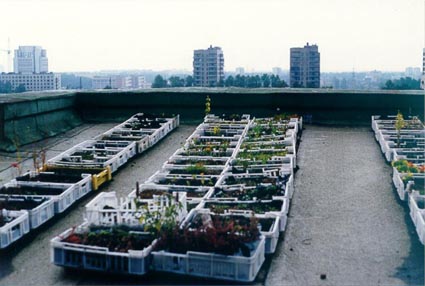
Environmental activism in post-soviet Russia used to be the country’s most dynamic and effective forms of social activism. In contemporary Russia, however, activists face severe obstacles in promoting green issues. The Saint Petersburg Urban Gardening Club, founded as early as 1993, is still struggling with the authorities’ acknowledgments of its important work.  
St Petersburg rooftop.Image source.


25 December 2011

Happy Holidays with a Bunch of Urban Readings

The architecture typology of the year 2011 is the tent, via Urban Affect
SYNCHRONICITY is also going on holidays. Meanwhile, here are a couple of suggested reads/links:


Allison Arieff writes on pop-up urbanism. City of Sound elucidates what cites and neuroscience can learn from each other. Peter Frase imagines four futures of capitalism after OWS, whereas Al Gore and David Blood imagine a sustainable capitalism. Also check out this interview with Thomas Balsley as the person who has designed more POPS (Privately Owned Public Spaces) than anyone else in New York City. Hito Steyerl on art as occupation. The economist explains the strange but extremely valuable science of how pedestrians behave. And finally, in this archive designers list their 3 favourite buildings.

I hope everyone is enjoying their holidays, and see you back in the new year! And check out my twitter page for more regular comments.

16 December 2011

International Public Space Library


Image source
IPSL book (source)
The International Public Space Library’s (IPSL) ambition is to offer books for free in public spaces all around the world. Soft-launched in September 2010, under the light of the recent occupy movement the experiment has gained new topicality.  Unlike a traditional library, the IPSL has no physical building or location. Each one of the books, anonymously donated, contains an IPAL label and are left in public spaces, free to pick up. Readers are encouraged to return the book after reading to the library by placing it at another space.
Anyone can donate a book to the IPSL collection. Just download a PDF copy of the IPSL ex libris here or download the image below, print and affix it inside the front cover of the books you want to share and spread them (but make sure they don’t get wet). With more publicity this project potentially is able to build up the greatest library of the planet and fromulates a challenging growing spatial configuration of a library consisting of connections and movements of books. "Libraries are not made; they grow." (Augustine Birrell (1850-1933), Chief Secretary of Ireland)


During the just started 7-day growing exhibition on Strategies for Public Occupation by the Storefront for Art and Architecture, the IPSL will launch a temporary ‘pop-up’ branch. This temporary library will offer a selection of books to help stimulate the ongoing public discussion of economics, politics, society and culture that may be reflective of the Occupy Wall Street movement and other social movements that have been or are currently powered by the free exchange of ideas, particularly through the sharing of books. At Liberty Plaza (Zuccotti Park) the occupiers established The People’s Library with a collection of more thatn 5500 books, unfortunately most of them got missing after the police raid to clear the park in November.

14 December 2011

China's Rapid Urbanization

China's urbanization made visible from atop in this impressing video assembled with data from Google Earth. (link via polis)

8 December 2011

Theory & Event - Supplement on OWS

Image Source
The Journal Theory & Event Volume 14 Number 4 published a supplement on Occupy Wall Street that is openly available for three month. Contributions are amongst others Slavoj Žižek on Actual Politics and the journal's co-editor Jodi Dean on Claiming Division, Naming a Wrong.

The City 2.0 - TED Prize Winner 2012


For the first time the TED prize winner is not an individual but an Idea: The City 2.0. Unveilling what the city 2.0 might be the announcement on TED reads like a manifesto: 

The City 2.0 is the city of the future… a future in which more than ten billion people on planet Earth must somehow live sustainably.

The City 2.0 is not a sterile utopian dream, but a real-world upgrade tapping into humanity’s collective wisdom.

The City 2.0 promotes innovation, education, culture, and economic opportunity.

The City 2.0 reduces the carbon footprint of its occupants, facilitates smaller families, and eases the environmental pressure on the world’s rural areas.

The City 2.0 is a place of beauty, wonder, excitement, inclusion, diversity, life.
The City 2.0 is the city that works.

So far- I would say - nothing revolutionary. But with the announcemnt of the prize winner TED also calls for contribution on the idea of the city 2.0.Individuals or organizations are called to formulate a 'wish' for this city of the future. The winning 'wish' will be unveiled by the end of February 2012. I am curious to see what the wishes will be.

6 December 2011

The City As A Palimpsest: Teufelsberg

+52° 29' 49.89", +13° 14' 27.64"

Strolling around Berlin is not a journey through history it is the simultaneous experience of various histories. Ergo, many urban theorists refer to the city of Berlin as a palimpsest.
Recently, lured by a sunny autumn Sunday, I took a long walk in West Berlin’s Grunewald – The Green Forest. At 3000 hectares it is the largest green area in the capital. With its old oak trees no one would expect a rich history on this site – if it wasn’t Berlin. Out of the flat sea of trees raises the Devil’s Mountain – the Teufelsberg - 80 m above the level of the surrounding and completely flat Grunewald. The Teufelsberg is one of the highest elevations in the city. I approached the site from S-Bahn station Heerstraße, the north-eastern part of the Grunewald.